Bakersfield Megalodon
$20,000.00
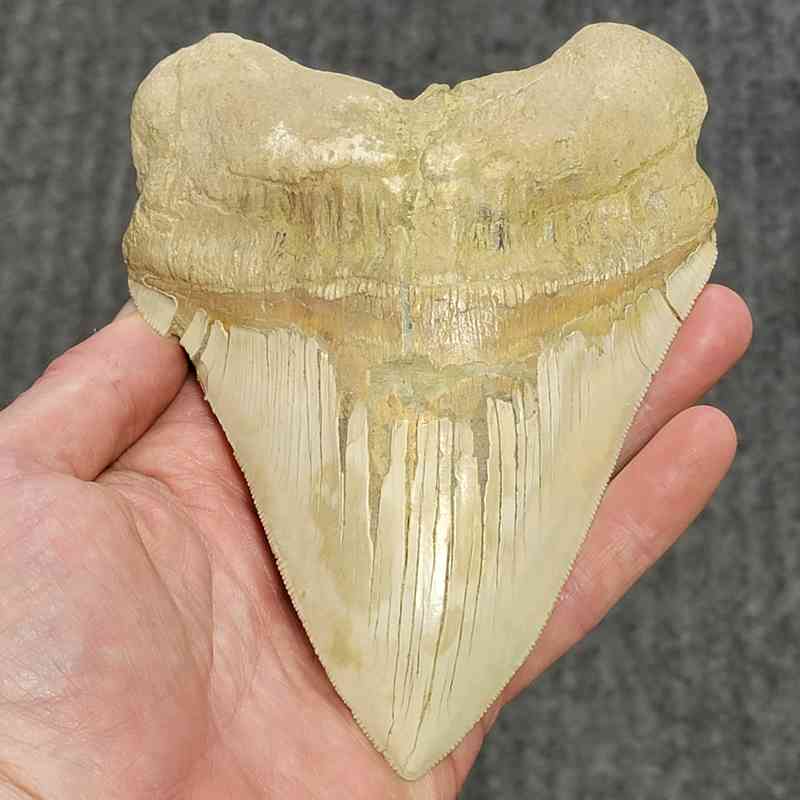
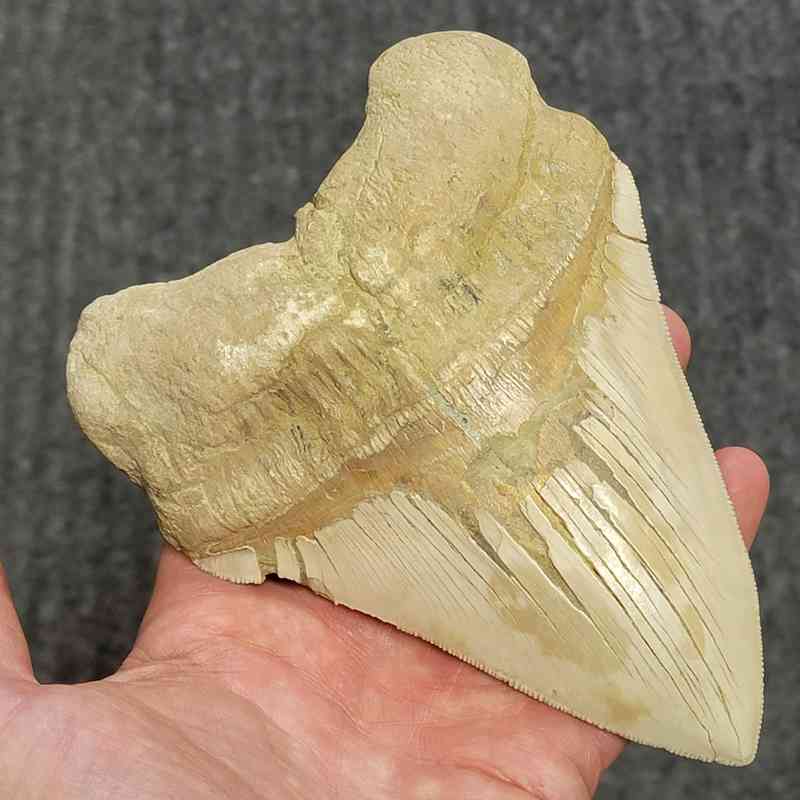
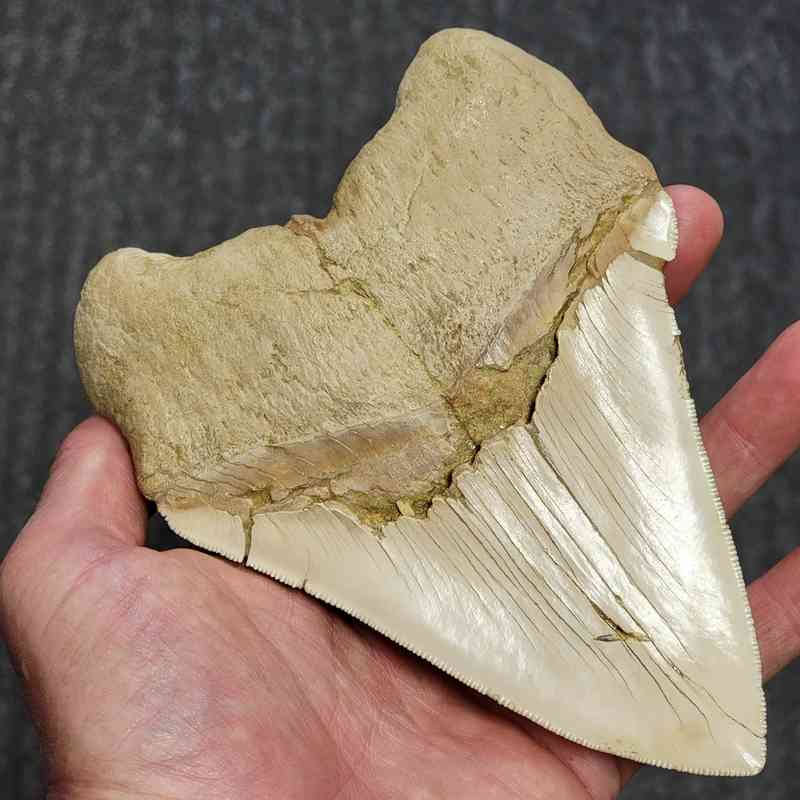
6.01-Inch Megalodon Tooth — Largest Recorded Specimen from Bakersfield, California
This authentic Otodus megalodon tooth is the largest documented Megalodon tooth ever recorded from the Bakersfield, California region. Sourced from the Round Mountain Silt formation, this specimen represents a rare large-size example from one of the most well-known Miocene marine fossil localities in the United States. The tooth features natural enamel preservation, visible serration detail, and the characteristic coloration associated with Bakersfield deposits.
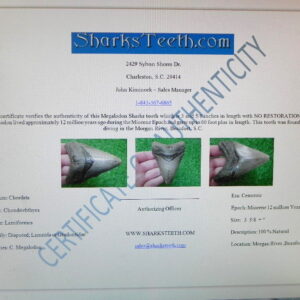
This fossil is suitable for advanced collectors, natural history displays, and educational collections. Its size and verified provenance make it a significant specimen for anyone seeking a premium California Megalodon tooth. Includes certificate of authenticity and protective storage case.
In stock
Additional information
| Weight | 9 oz |
|---|
 The megalodon, scientifically known as Otodus megalodon, was a colossal shark that dominated the world’s oceans from approximately 23 to 3.6 million years ago. This extinct apex predator, renowned for its massive size and powerful bite, has captivated the imagination of scientists and the public alike. Fossil evidence, primarily its enormous teeth, reveals that megalodon was significantly larger than the modern great white shark. To delve deeper into the fascinating world of this prehistoric giant, explore resources like those provided by the Smithsonian Ocean Portal, which offers detailed insights into megalodon’s history and biology, and the information provided by Britannica, which goes into the scientific classifications, and fossil findings of this amazing creature. To learn more about the size and behaviors of this ancient shark, you can also view information provided by the Natural History Museum.