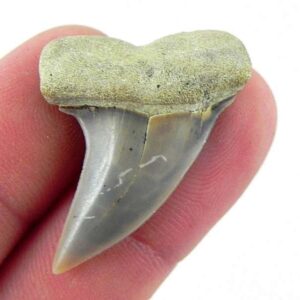
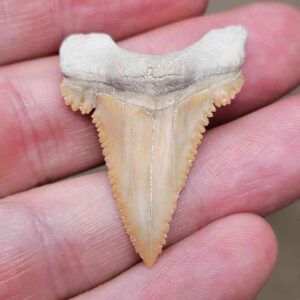
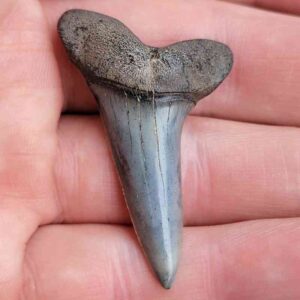
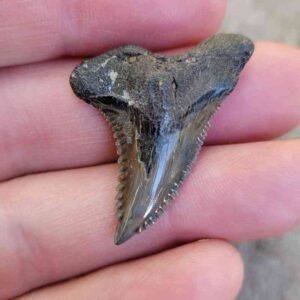
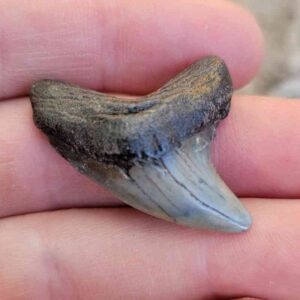
Fossil Shark Teeth
Dive into the prehistoric depths with our premier collection of Fossil Shark Teeth. From the massive serrations of the Megalodon’s ancestors to the sleek needles of ancient reef hunters, each tooth is a genuine piece of natural history, hand-selected for quality and preservation.
Whether you are a seasoned paleontologist or a first-time collector, these specimens offer a tangible connection to the apex predators that ruled the oceans millions of years ago.
-

Angustiden Teeth (31)
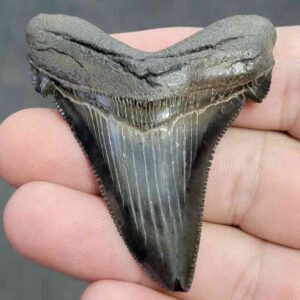
Angustidens Shark Teeth: The "Eared" Giants
Step back into the Oligocene Epoch (approximately 33 to 23 million years ago) with our premium selection of Angustidens shark teeth. As a direct ancestor to the famous Megalodon, Carcharocles angustidens represents a fascinating evolutionary bridge.
These teeth are instantly recognizable by their sharp, fine serrations and—most notably—their prominent lateral cusplets (the "ears" at the base of the crown). Found primarily in the riverbeds and coastal plains of the Southeastern United States and parts of Europe, our Angustidens specimens are prized for their heavy mineralization and stunning color variations, ranging from creamy tans to deep, "gunmetal" blues.
-

Angustiden Teeth – Summerville (27)
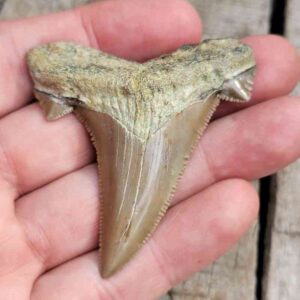
Summerville Angustidens: The Lowcountry’s Prehistoric Legacy
Our Summerville Angustidens collection features some of the finest "land-site" fossils found in South Carolina. Unlike river-recovered teeth that can be tumbled and worn by water, Summerville teeth are often found in local "creek digs" and construction sites, preserving the razor-sharp serrations and delicate lateral cusplets that make Carcharocles angustidens so unique.
-

Auriculatus Teeth (11)
Otodus auriculatus: The Primitive Eared Giant
Before the Megalodon and the Angustidens, the oceans were ruled by Otodus auriculatus. Dating back to the Eocene Epoch (approximately 35 to 55 million years ago), these teeth are the definitive "Eared" fossils. They are characterized by their massive, jagged lateral cusplets and heavily serrated edges, marking a pivotal moment in shark evolution where the smooth-edged Otodus lineage began developing the serrations needed to hunt large marine mammals.
-

Benedeni Teeth (18)
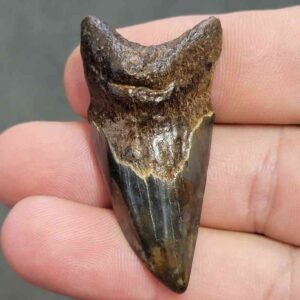
Parotodus benedeni: The Rare "False Mako"
The Parotodus benedeni is one of the most enigmatic and sought-after fossils in the world of paleontology. While the Megalodon may be more famous, the "Benedeni" is far rarer. These sharks were pelagic (open-ocean) hunters that lived from the Eocene to the Pleistocene, staying far away from the coastal areas where most fossils are formed. Consequently, finding one of these teeth is a landmark event for any collector.
-

Chilean Great White Teeth (34)
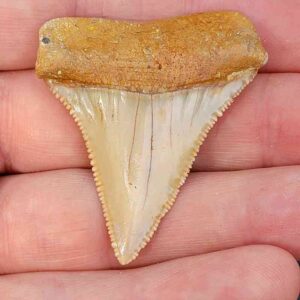
Chilean Great White Teeth: The Gold Standard of Preservation
Experience the unmatched beauty of prehistoric Great White shark teeth from the Atacama Desert, Chile. Sourced from the world-famous Bahia Inglesa and Hurra Formations, these fossils date back to the Pliocene (approx. 3–5 million years ago). Because they were preserved in a dry, phosphate-rich desert environment rather than a high-energy riverbed, Chilean teeth retain a level of detail that is breathtaking.
-

Extinct Great White Teeth - Bakersfield, Ca (30)
Bakersfield Extinct Great Whites: Treasures of Sharktooth Hill
Discover the stunning beauty of Sharktooth Hill Great White ancestors. Our Bakersfield collection features the iconic Carcharodon hastalis (formerly Isurus hastalis), a massive predator that dominated the Miocene seas of Central California. These teeth are world-famous not just for their size, but for their exceptional "honey" and "butterscotch" coloration, a result of the unique mineral preservation in the Bakersfield desert soil
-

Extinct Great White Teeth - SC (30)
South Carolina Extinct Great Whites: Lowcountry Legends
Experience the raw power of the Carcharodon hastalis, the legendary ancestor to the modern Great White. While the South Carolina coast is famous for Megalodons, the "Extinct White" (often called the Broad-Toothed Mako) is a favorite among local collectors for its sleek, surgical lines and incredible color diversity.
-

Fossil Great White Teeth (53)
Fossil Great White Teeth: The Evolution of the Apex Predator
Own a piece of the ultimate predator’s history with our Fossil Great White collection. These teeth represent the Carcharodon carcharias species—the same Great White that patrols our oceans today—but preserved as stone fossils dating back 2 to 5 million years.
-

Fossil Tiger Teeth (27)
Fossil Tiger Shark Teeth: The Ocean’s Ultimate Generalist
Add the "serrated scimitar" of the sea to your collection with our Fossil Tiger Shark teeth. These fossils primarily represent the extinct Galeocerdo cuvier (the modern Tiger) and its prehistoric ancestors like Galeocerdo aduncus and Physogaleus contortus.
-

Palaeocarcharodon (15)
Palaeocarcharodon Teeth: The Jagged "Pygmy Great White"
Step back to the dawn of the Cenozoic era with our collection of Palaeocarcharodon orientalis shark teeth. These are not your typical shark fossils; they are known for their incredibly distinct, irregularly serrated edges and prominent lateral cusplets. While they share a name that sounds like the Great White, many paleontologists believe they are a unique, extinct offshoot that developed serrations independently—making them a fascinating "evolutionary experiment."
-

Peruvian Fossil Great White Shark Teeth (15)
Peruvian Great Whites: Masterpieces of the Pisco Formation
Own one of the most aesthetically perfect fossils in the world: the Peruvian Fossil Great White (Carcharodon carcharias). Hailing from the legendary Pisco Formation, these teeth date back to the Miocene and Pliocene epochs. They are famous among collectors for their "Desert Polish"—a natural, high-gloss sheen that occurs during the fossilization process in the Peruvian sands.
-

ReefShark (7)
Fossil Reef Shark Teeth: The Agile Hunters
While the giants like Megalodon ruled the open ocean, the Fossil Reef Shark (Carcharhinus family) dominated the prehistoric shallows. Our collection of reef shark fossils includes ancestors of the modern Grey Reef, Blacktip, and Whitetip sharks. These predators have remained virtually unchanged for millions of years, a testament to their perfect design.
-

Fossil Desori Teeth (33)
Fossil Desori: The Elegant Speedster
Step into the world of the prehistoric Mako with our collection of Fossil Desori teeth. Primarily belonging to the species Cosmopolitodus desori, these teeth are the "surgical blades" of the Miocene and Pliocene seas. Known for their long, slender, and highly curved profiles, Desori teeth are a favorite among collectors who appreciate the aggressive, "snaggle-toothed" look of open-ocean predators.
-

Fossil Hemipristis Teeth (30)
Fossil Hemipristis: The Legendary "Snaggletooth"
Unleash the prehistoric predator known for the most unique bite in the ocean. The Hemipristis serra (Snaggletooth Shark) lived during the Miocene and Pliocene epochs, and its teeth are among the most visually striking fossils ever discovered.
-

Fossil Thresher Teeth (9)
Fossil Thresher Shark Teeth: The Sleek Pelagic Hunter
Step into the deep blue with our collection of Fossil Thresher Shark teeth. Representing species like Alopias grandis and Alopias latidens, these fossils date back to the Miocene and Pliocene epochs. Thresher teeth are the "minimalist masterpieces" of the shark world—characterized by their smooth, razor-sharp edges, small size, and incredibly thick, robust roots.